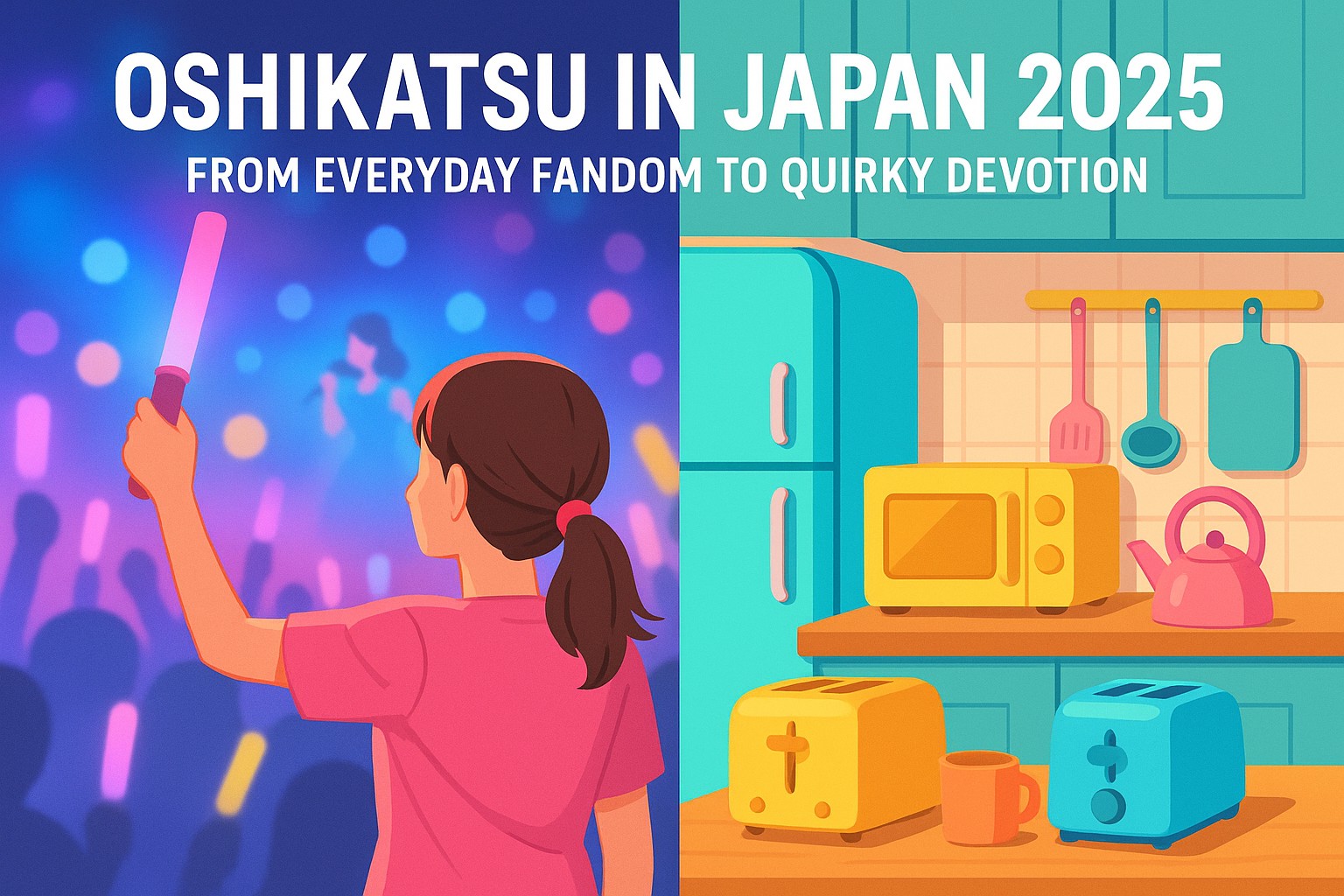
If you follow Japanese pop culture online, you might have seen the word 推し活 (oshikatsu), which literally means “support activities” for your oshi — the person, character, or group you’re passionate about.
Far from being a niche hobby, oshikatsu has grown into a major part of Japanese lifestyle and economy. In 2025, 38.9% of Japanese people aged 15–69 reported having an oshi, up from 35.7% in 2022. Among teenagers, the figure is even higher at 67.3%. This steady rise shows how fandom has moved from subculture to mainstream.
🎤 What Typical Oshikatsu Looks Like
For those new to the term, here are the most common forms of oshikatsu:
- Attending Live Events
Concerts, theater performances, sports games — being physically present to cheer on your oshi is a core activity.
Example: Idol fans often attend multiple shows during a single tour. - Merchandise Collecting
From keychains and photo cards to full-size posters, merchandise is a way to “own” a piece of your fandom.
Pro tip: Limited editions often sell out in minutes. - Online Engagement
Posting photos, fan art, or clips under hashtags like #推し活 helps fans connect with each other and promote their oshi. - Travel for Events
Many fans travel across Japan — or even overseas — to attend events, often spending on transport, hotels, and local food. - Support Through Purchases
Buying every album version, streaming songs repeatedly, or participating in crowdfunding campaigns to help projects succeed.
📈 The Numbers Behind Oshikatsu
- Market Size (2025): Estimated at ¥3.5 trillion ($23 billion), making up about 2.1% of Japan’s retail economy.
- Growth: Up from ¥2.7 trillion in 2019, driven by new fandom categories like VTubers and esports.
- Participation:
- Teens (10s): 67.3% have engaged in oshikatsu.
- 20s: Around 56.5%.
- 30s: 37.2%, but growing fastest (especially women aged 30–34).
- 40s–50s: 17–26%, showing fandom is not just for the young.
🎯 Quirky & Unusual Oshikatsu
While the basics are familiar to most fandom cultures, Japan has taken oshikatsu to some creative extremes:
- Color-Coordinated Appliances – Fans redecorate their kitchens with appliances in their oshi’s signature color.
- Oshi Savings Accounts – Dedicated bank accounts for event tickets and merch budgets.
- Pilgrimages to Oshi Landmarks – Visiting places mentioned by an oshi, from cafés to filming locations, boosting local tourism.
- Oshi-Inspired Menus – Restaurants and even school lunches recreating an oshi’s favorite dishes.
- Charity with a Fandom Twist – Blood drives offering limited oshi-themed merchandise.
- Oshi Weddings – Couples marrying on their oshi’s birthday or using themed décor.
- Oshi Goshuin (Temple Stamps) – Collecting stamps designed in collaboration with characters.
- Oshi Hometown Tax Donations – Using Japan’s “furusato nozei” system to support an oshi’s hometown.
🌏 Why It Matters Culturally
Oshikatsu is more than fan activity — it’s a way for people to add joy, identity, and community to daily life. As the market continues to grow, fueled by both traditional activities and quirky innovations, it’s clear that “having an oshi” is becoming a defining part of modern Japanese culture.


コメント