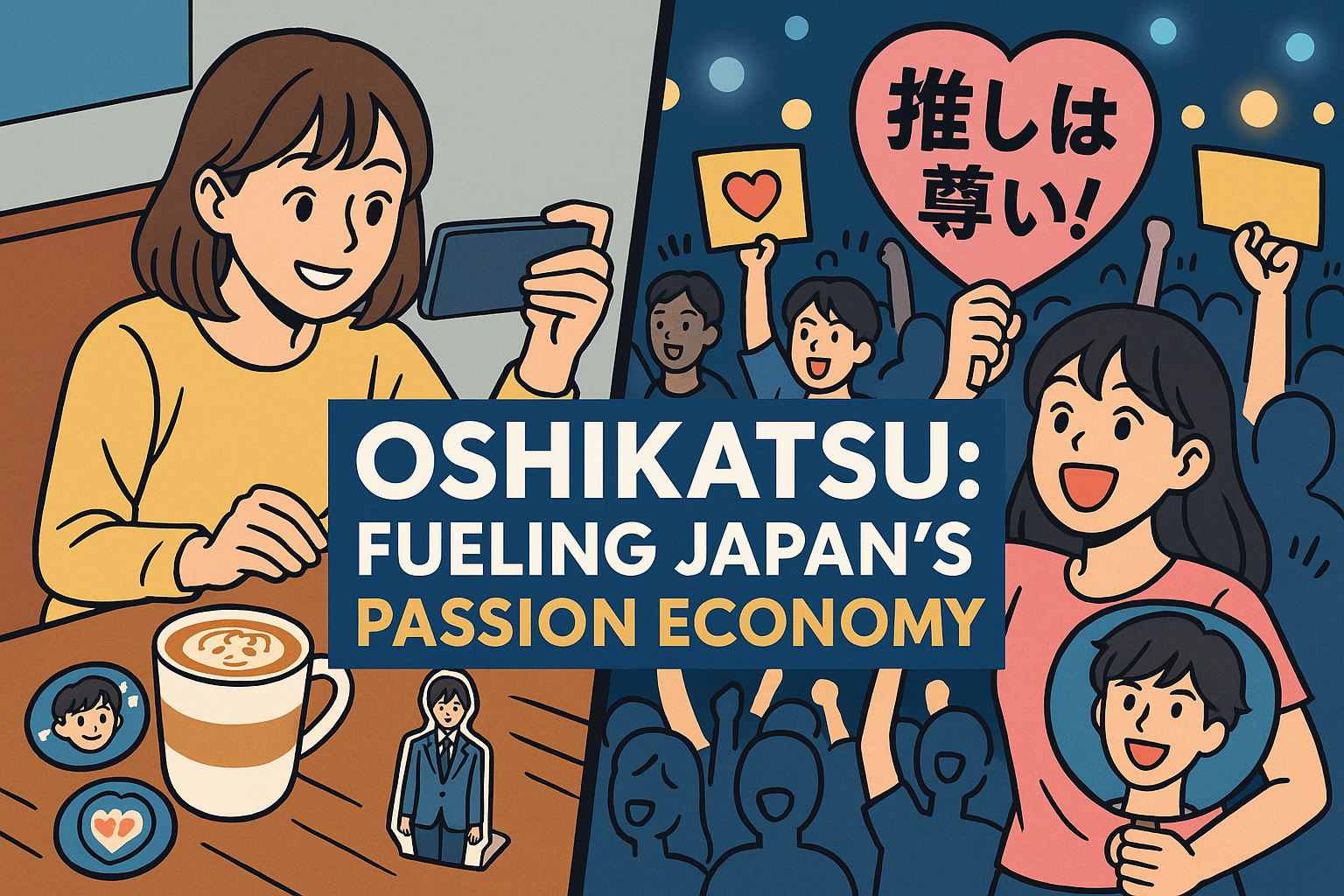
Forget minimalism—Japan’s latest obsession is all about more. More merch, more fan events, more love for your favorite character, idol, or even fictional boyfriend. Welcome to the vibrant world of Oshikatsu (推し活), or “supporting your fave.”
What Is Oshikatsu?
“Oshi” means your favorite—be it a singer, anime character, mascot, or VTuber. “Katsu” comes from “katsudō” (activity). Together, Oshikatsu means “cheering for your fave,” and it’s no longer a niche hobby.
Fans express their love in countless ways: attending concerts, creating custom photo boards, commissioning art, buying multiple versions of the same merch, or traveling across the country to see their idol’s ad banners. And they’re spending big.
How Big Is the Oshikatsu Economy?
According to recent estimates, Japan’s Oshikatsu market is worth over ¥3.5 trillion (~$22 billion USD). That’s equivalent to 2.1% of Japan’s entire retail market. Around 14 million people actively engage in Oshikatsu activities every year.
From anime expos and “cheki” (photo) sessions with underground idols to fan-funded billboards and pop-up cafés, this fandom economy is shaping consumer behavior—and companies are taking notice.
Companies Are Getting In On It
From trains to banks, companies are jumping on the Oshikatsu train:
- Railway companies sell special “Oshi Tickets” that fans buy just to collect.
- Cafés release limited-edition drinks inspired by fictional characters.
- Department stores host pop-up shops themed around trending anime or idols.
- Financial institutions are offering “Oshi Credit Cards” with anime visuals and perks.
Even local governments have started to use mascots and collabs with anime to boost tourism—especially in rural areas.
Why It Matters
Unlike passive consumerism, Oshikatsu is active, emotional, and loyal. It’s a form of identity and self-expression—especially for younger generations who find comfort and community through their fandoms.
It’s also a massive driver of:
- Social media content (Oshi-based TikToks, Instagram reels, etc.)
- Travel and event spending
- Creative production (fan art, handmade goods, etc.)
The Bottom Line
Japan’s Oshikatsu trend is more than just a fan craze—it’s a consumer revolution rooted in passion and personal connection. In a world where attention is currency, fans aren’t just following their faves—they’re building them into billion-yen industries.

コメント