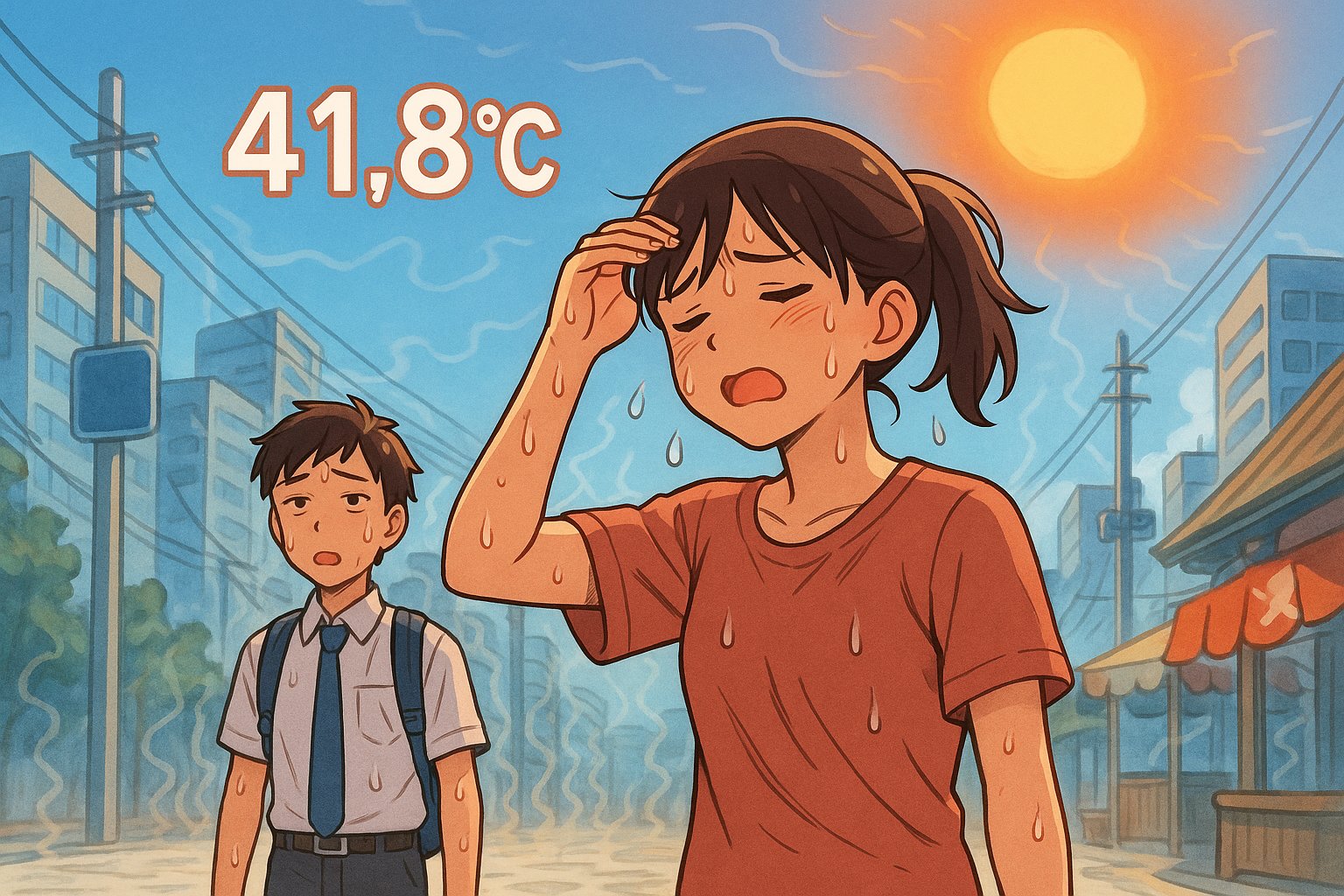
Japan is currently going through its most extreme summer in recorded history. On August 5th, 2025, multiple cities hit 41.8°C (107.2°F), tying the nation’s all-time high. But it’s not just the numbers that are shocking—this summer stands out for its prolonged heatwaves, oppressive humidity, and the sheer number of people affected.
Over 50,000 people have already been hospitalized due to heatstroke, and authorities are urging people to avoid unnecessary outings. What’s especially alarming is the rising number of young people, including teenagers and children, being affected. Compared to previous years, this summer is not just “hot”—it’s a public health emergency.
Japan vs. the Rest of the World
Japan isn’t alone. Around the globe, extreme heat is dominating headlines:
- In the U.S., cities like Las Vegas saw highs of 48.9°C (120°F), straining power grids and sparking rolling blackouts.
- Southern Europe has been battling wildfires in Spain, Italy, and Greece due to persistent 40°C+ heat.
- China and South Korea are also experiencing record temperatures, but Japan’s high humidity and urban heat islands make the situation more dangerous and physically exhausting.
In global terms, Japan may not have the single highest temperatures—but it has some of the most severe heat stress conditions due to the combination of humidity, concrete-heavy cities, and aging population.
Impact on Agriculture and Tourism
The heat is taking a toll not only on people, but also on the economy. In agriculture, rice crops are being affected by high nighttime temperatures, leading to reduced grain quality—a phenomenon known as “white immature rice.” Farmers are already reporting early signs of damage that could impact yields for the rest of the year.
Tourism, too, is feeling the strain. Summer festivals and fireworks events, once major draws for both locals and visitors, are being canceled or scaled back due to health concerns. Outdoor attractions are seeing a decline in attendance as people avoid the heat, impacting local economies and small businesses.
How People in Japan Are Beating the Heat
In the face of extreme temperatures, people across Japan are getting creative with how they stay cool. Here are just a couple of examples that reflect current trends.
Cold Brew Tea Culture
Cold-steeped green teas like sencha and genmaicha are gaining popularity as a gentle, refreshing alternative to sugary drinks. These teas are easy to prepare at home and offer a taste of tradition with a cooling twist.

ZAMST Cool Poncho
This wearable cooling poncho, originally designed for athletes, is now being used by athletes and festival-goers. It combines water-circulation and moisture-wicking fabric to help lower body temperature in a natural way.

These are just a few of the many practical solutions emerging during Japan’s hottest summer on record.
How Social Media Is Responding
On social media, the mood has shifted noticeably. In past summers, hashtags like #IceCreamTime or #BeachDayJapan dominated timelines. But this year, more serious and urgent tags such as #Over41Degrees, #StayIndoors, and #CanWeSurviveThisSummer are trending.
People are sharing photos of melted roads, broken thermometers, and canceled events—not for laughs, but as warnings. Humor is being replaced with frustration, anxiety, and concern, especially among younger generations who are realizing that climate change is no longer a distant threat.
Looking Ahead
With the climate crisis intensifying, summers like this one may become the norm. Japan’s blend of ancient wisdom and cutting-edge tech offers valuable lessons for the rest of the world. Whether it’s brewing tea overnight or slipping into a cooling poncho, these small steps are helping people survive—and stay sane—through record-breaking heat.
But it’s clear that individual coping strategies alone won’t be enough. Infrastructure, policy, and cultural attitudes will all need to evolve to meet the challenges of a rapidly warming planet.


コメント