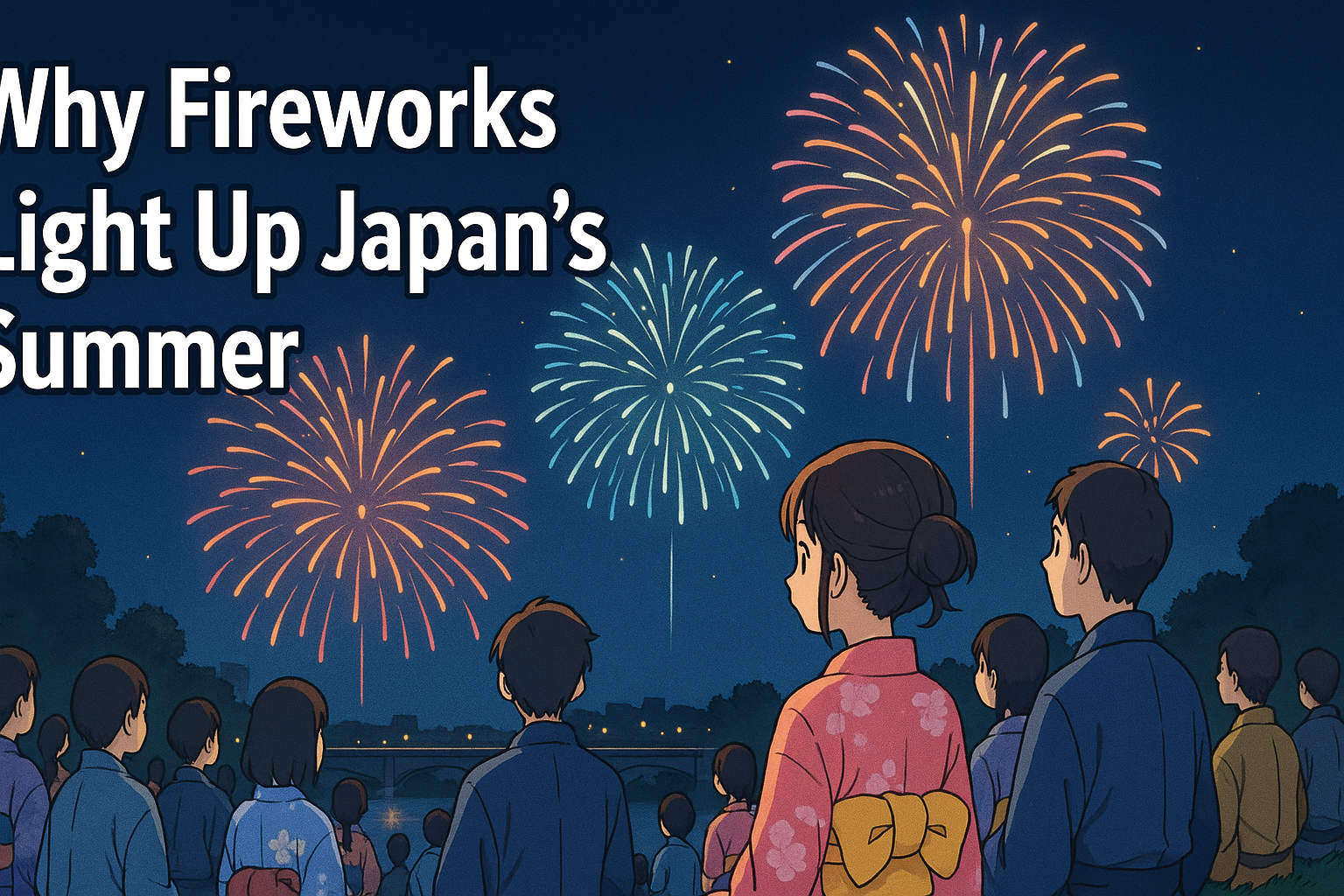
When Americans think of fireworks, they often think of ringing in the New Year or celebrating the Fourth of July. But in Japan, fireworks—or hanabi (literally “flower fire”)—are most closely associated with summer, not the New Year. This cultural difference surprises many international visitors. So why does Japan light up the sky in July and August, instead of on December 31?
A Tradition Rooted in the Edo Period
Japan’s summer fireworks tradition dates back to the 18th century during the Edo period. One of the first major fireworks events, the Sumidagawa Fireworks Festival in Tokyo, was originally held to honor the spirits of the dead and to ward off epidemics. Over time, these events evolved into large-scale summer spectacles, blending spiritual roots with entertainment.
Fireworks as a Symbol of Summer
In Japan, summer is a time of reflection and seasonal celebration. Hanabi taikai (fireworks festivals) are held throughout the country in July and August, often in conjunction with traditional festivals like Obon, a time to honor deceased ancestors. People gather in yukata (light summer kimonos), eat festival food, and enjoy the fleeting beauty of fireworks—just like the fleeting nature of life, a concept rooted in Japanese aesthetics.
Why Not New Year’s Eve?
Unlike in the U.S., New Year’s Eve in Japan is a quiet, spiritual time. Rather than fireworks and parties, many people visit temples and shrines for Joya no Kane, the ringing of the bell 108 times to cleanse sins from the past year. It’s a time for reflection, family, and fresh starts—not loud celebrations.
Moreover, Japanese winters are cold and less suitable for outdoor events. Summer, with its longer evenings and warmer weather, is ideal for outdoor gatherings and spectacular firework displays.
Cultural Context Matters
While Americans might associate fireworks with loud, energetic celebrations, Japan uses them to highlight beauty, transience, and seasonal harmony. It’s less about ringing in the new and more about appreciating the now.
So if you’re in Japan during the summer, don’t miss a hanabi taikai. It’s more than just a show—it’s a cultural experience steeped in tradition, emotion, and artistry.
Want to see it for yourself?
Check out major summer festivals like the Sumidagawa Fireworks Festival in Tokyo or the Nagaoka Fireworks Festival in Niigata. You won’t find anything quite like them on New Year’s Eve.
コメント