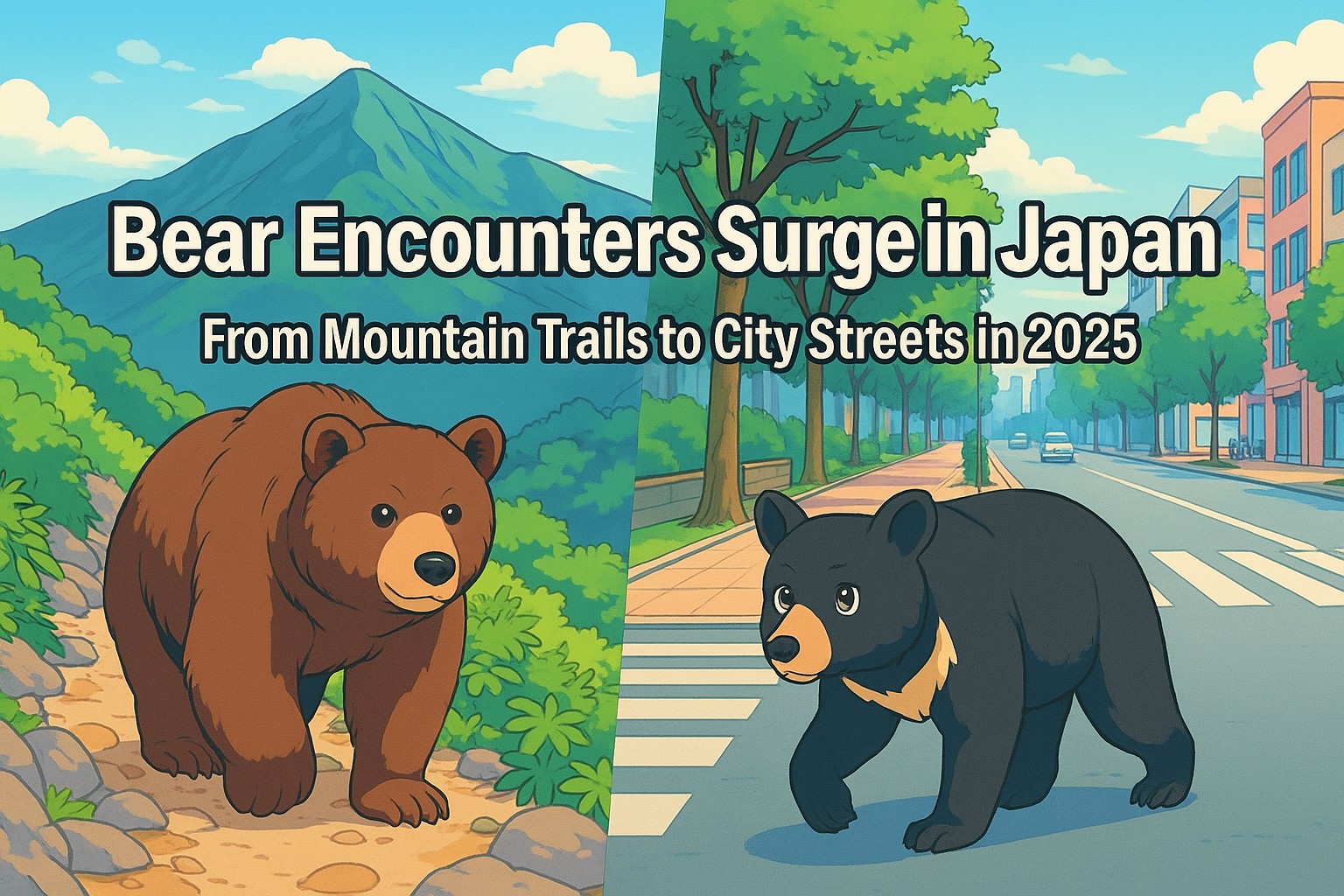
In recent months, Japan has been buzzing with one of its most unexpected and alarming topics of 2025: bear encounters. While Japan’s mountainous regions have long been home to brown bears (Ursus arctos yesoensis) in Hokkaido and Asiatic black bears (Ursus thibetanus japonicus) on the main islands, this year has seen an unusual surge in sightings, attacks, and — most surprisingly — appearances near urban areas.
A Year of High Bear Awareness
The public’s attention to bear-related news skyrocketed in mid-August after a serious incident on Mount Rausu in Hokkaido. A climber in his 20s went missing following a suspected brown bear attack — the first fatal bear incident in the area in 31 years. Search operations and safety alerts dominated national headlines, with social media users closely following updates.
This tragic event was not isolated. Since early summer, reports of bear sightings have poured in from across the country, from the mountains of Tohoku to suburban neighborhoods in Hokuriku and Nagano. In July, a northern town even declared a “Bear State of Emergency” after multiple aggressive encounters.
Why 2025 Stands Out
Several environmental and behavioral factors have combined to make this year particularly tense:
- Poor food availability: Key natural food sources, such as beech nuts and acorns, are expected to be scarce this autumn, driving bears closer to human settlements in search of calories.
- Expanded range: Bears have been spotted in regions where they were once rare, suggesting changes in habitat and population density.
- Loss of fear toward humans: More bears are becoming accustomed to human presence, reducing the natural avoidance that once kept encounters rare.
When Bears Come to Town
Perhaps the most surprising development is the appearance of bears in suburban — and occasionally urban — settings.
- In Sapporo, Hokkaido’s largest city, brown bears have been seen near schools and residential streets.
- In Sendai, an Asiatic black bear wandered into a suburban park, prompting temporary closures.
- In Kanazawa and Toyama, security cameras captured bears roaming parking lots and near convenience stores at night.
These sightings underscore a sobering truth: bear encounters are no longer limited to hikers and rural residents.
Safety and Preparedness
Authorities and wildlife experts recommend:
- Avoiding early morning or evening walks in areas close to forests.
- Properly securing garbage and outdoor food sources.
- Carrying a bear bell or portable radio in areas where sightings have been reported.
- Staying informed through local alerts and official announcements.
More Than a Wildlife Story
For many in Japan, this surge in bear activity is more than just a wildlife curiosity — it’s a reminder of the delicate balance between human communities and the country’s rich natural ecosystems. Social media discussions have shifted from posting scenic hiking photos to sharing safety tips, maps of recent sightings, and debates over conservation versus public safety.
As autumn approaches and natural food sources dwindle, experts warn that the coming months could see even more bear activity. For visitors and locals alike, 2025 is shaping up to be a year when “bear safety” is as much a part of travel planning as train timetables and weather forecasts.


コメント